Wednesday, January 9, 2019

Making The Order of the Zodiac

For the last few years my bestie and I have had tons of fun attending the local comicon.  We're not champion cosplayers, but we have a blast nonetheless.  Last year I pulled together a couple steampunk dresses from thrift store finds, but this year I wanted to try for actual anime characters.  Luckily I have a friend who is game for anything and a husband who is easily persuaded.


I am a huge Gundam Wing nerd, my friend and husband far less so, and I was thrilled they put up with me dressing them up like that.  The real fun for me though is always the making, not the wearing.

I started with a trio of coats from the thrift store.

Lady Une's was easy, there are tons of tunic length red coats for women at the thrift store.  Zechs' was also fairly straightforward; ankle length red coats are also very common.  My husband's coat was the most challenging.  Finding a blue suit coat to fit him was the first hurdle, and I only found it about a week before the event.  It also needed the most alteration, to add the white front and rear tails.  After those major alterations, it's all embellishment.

My supplies of gold fabric and trim ready to be applied, and my 'assistant' on paw to 'help.'  He's especially good at holding things down.  I used thrifted black sweaters to make the under shirts for Une and Zechs; a faux leather pouch purse became their gun holsters, and a couple of vintage hankies transformed into lacy collars.


With nearly 30 sticks of hot glue, large scrap fabric reserves and a heaping helping of cheerful perseverance, three full costumes can indeed come together in less than three weeks.  


And in case you were wondering how much gold trim these costumes used.  All theses spools were full when I started.

Wednesday, October 10, 2018

Vintage Craft Book Feature: Australian Designer Knits (Australia, 1986)

Another of my many needlework hobbies is the collection of vintage craft books.  Found in dusty corners of second hand shops, in pride of place in used book stores, these old tomes often contain beautiful nuggets of crafting wisdom, and a heaping helping of vintage charm.  Reviving the techniques, tips and retro projects is just one more way for us to bring back the wonders of the handmade.

Australian Designer Knits - Australia 1986


I found this retro gem at the same time and place as a previous feature book:  The Sweater Book.  While I was fairly certain there was nothing I wanted to actually knit within, the price was right to pick it up to share with you all.  Surely there would be some giggle and cringe worthy 80's fashions in it worth the 50 cents.  I was not disappointed.


I''m not sure anything else needs to be said after that sweater :)  In all fairness, the book does start out with some helpful knitting how-to.  It's not extensive, but it's enough to get a beginner started.  They also have nice blurbs about each designer and pattern that give a bit more depth to what would otherwise be just a book full of silly retro patterns.


That said, it is still full of silly retro patterns.  I guess if you ever want some practice on intricate color work and following charts, this is the book for you.  Otherwise, there isn't much here outside of novelty value.  The pictures are large and colorful, it might make a nice conversation piece on a coffee table.


Friday, May 25, 2018

Free Pattern Friday! 05-25-2018

Surprise, surprise!  This week's free pattern isn't a tracing, it's a translation!  Take a gander below for my Google assisted translation of one of the projects from the Schoeller Wolle/Esslinger Wolle pamphlets.  Also pictured is a scan of the original instructions in German.  Any German readers, please let me know if I got anything wrong!


Schoeller Wolle/Esslinger Wolle Pamphlet – #2231 Cross Knitted Bolero – Translated from original German

Size: 36/38
Bust of the Model: about 92 cm
Total Length: 43cm

Materials: SCHOELLER Wool “Carmen” 450g Black, ESSLINGER Wool “Gold and Silver” 200g Black, One pair INOX Tric needles size 4.5 and 5mm, and One INOX circular needle size 4mm 120cm long.

Use two strands of “Gold and Silver”

Stockinette Stitch: RS row knit, WS row purl
Stripe Sequence in St. St.: *5.5cm (about 12 rows) in “Carmen” using 5mm needle, 6 rows in “Gold and Silver” using 4.5mm needle* Repeat between *'s

Swatch test and change needles as necessary!
Gauge: 14sts by 30 rows = 10cm

Work: Using two strands of “Gold and Silver” cast on 48 sts with a 4.5 mm needle and work in K1, P1 for 2 cm. Begin stripe sequence.

Switch to “Carmen”, increase one stitch on each end of the 4th, 6th, and 8th rows, after 12 rows in “Carmen” switch to “Gold and Silver”. In the first row with “Gold and Silver” decrease 14 sts, distributed evenly.

Continue the stripe sequence, increasing and decreasing stitches as follows:
1st Stripe “Carmen”: increase 10 sts,
1st Stripe “Gold and Silver”: decrease 5 sts,
2nd Stripe “Carmen”: increase 10 sts,
2nd Stripe “Gold and Silver”: decrease 5 sts,
3rd Stripe “Carmen”: increase 14 sts,
3rd Stripe “Gold and Silver”: decrease 9 sts,
4th Stripe “Carmen”: inrease 17 sts
4th Stripe “Gold and Silver”: decrease 12 sts,
5th Stripe “Carmen”: inrease 19 sts
5th Stripe “Gold and Silver”: decrease 14 sts,
6th Stripe “Carmen”: inrease 21 sts
6th Stripe “Gold and Silver”: decrease 19 sts,
7th Stripe “Carmen”: inrease 24 sts
7th Stripe “Gold and Silver”: decrease 19 sts,
8th Stripe “Carmen”: inrease 24 sts
8th Stripe “Gold and Silver”: decrease 19 sts,

Simultaneously:
In the 2nd through 6th stripes in “Carmen” increase 1 on each end in the 4th, 6th, and 8th rows.
In the 7th stripe in “Carmen” increase 1 st on each end of the 4th and 6th rows.

After the 8th “Gold and Silver” stripe divide the work for the neckline and continue to work both parts separately. (57 sts each side):
Still using “Gold and Silver” cast off 1x2 and 1x1 sts at the center. Increase 10 sts distributed evenly, then repeat the cast off again.

The 9th stripe in “Gold in Silver” is the center back!

Finish the piece in “Carmen”; for the neckline on the left side work every other row 8x4 sts decreased. For the rounding at the right side of the piece, on the 3rd row in “Carmen” cast off every other row 2x1, 3x2, and 3x3 sts, then cast off remaining 8 sts.

Work the other half of the bolero as above, reversing neckline shaping.

Completion:
Close seams. With circular needle and 2 strands of “Gold and Silver” pick up 286 sts along the front, bottom, and neckline edges (lower back edge 78sts, front pieces 172 sts each, back neckline 36 sts). Work in K1, P1 for 2.5 cm, cast off in pattern.


My Notes: Hoo-boy, this one is a doosy...
I am not sure if it is because of how German knitting patterns are written, or because this pattern was crammed onto a small pamphlet, but it's a bit sparse. Specific stitches are not given for increasing or decreasing, and how many stitches to add or subtract and when is at best stated as “increase this many in this row, distributed evenly.”

The bold and exclamations are all straight from the pattern. They were among the easiest things to figure out. This one was a lot tougher to decipher than the Dutch pattern, as there were more abbreviations and no key as to what they meant. Google and some German speaking friends helped me out with words, but they aren't knitters, so I made the best sense of it that I could. Perhaps if I give a try at knitting this pattern I will write it out with a little more detail. There is a lot going on at once in this pattern, and it's not immediately intuitive with the scant instructions.

The bit about the 9th stripe of “Gold and Silver” being the center back especially confused me, as I don't think there is a 9th stripe. You finish each half of the bolero with “Carmen” after the 8th stripe, and then sew the halves together. Maybe they just mean where the 9th stripe would be if there was one? Also, where the neckline begins the pattern clearly says “after the 8th 'Gold and Silver' stripe”, but then also clearly says to do the next bit in 'Gold and Silver'. Is this stripe wider than the others then? Or is it meant to be done before the end of the stripe?

I wrote the pattern above as it is in the pamphlet, but I want to add what I believe is going on in the stripe sequence just based on the diagram given and my own knitting experience. While it seems from the text like there are 9 of each stripe (set up plus 8 more) I think the setup is meant to happen in the first stripe. The diagram only shows 8 stripes. I believe the increases and decreases in each stripe are supposed to happen in the first row of each stripe, and the other increases and decreases (stated at the very start and under 'simultaneously') are additional to those. As I have not knit this yet, I cannot say for sure, but that is my best guess at how to reconcile the text and the diagram.

As for the yarn...surprise, surprise, neither are produced anymore. I looked on the internet and found no trace of “Carmen”, but it appears to be some sort of boucle or other fluffy yarn to make that poofy appearance in stockinette stitch. “Gold and Silver” I was able to find a bit about. It is a rayon/lurex metallic yarn that looks about sock or lace weight. Best advice, find whatever yarn suits your tastes and then find needles to get the right gauge.


Friday, May 18, 2018

Simple Pleasures

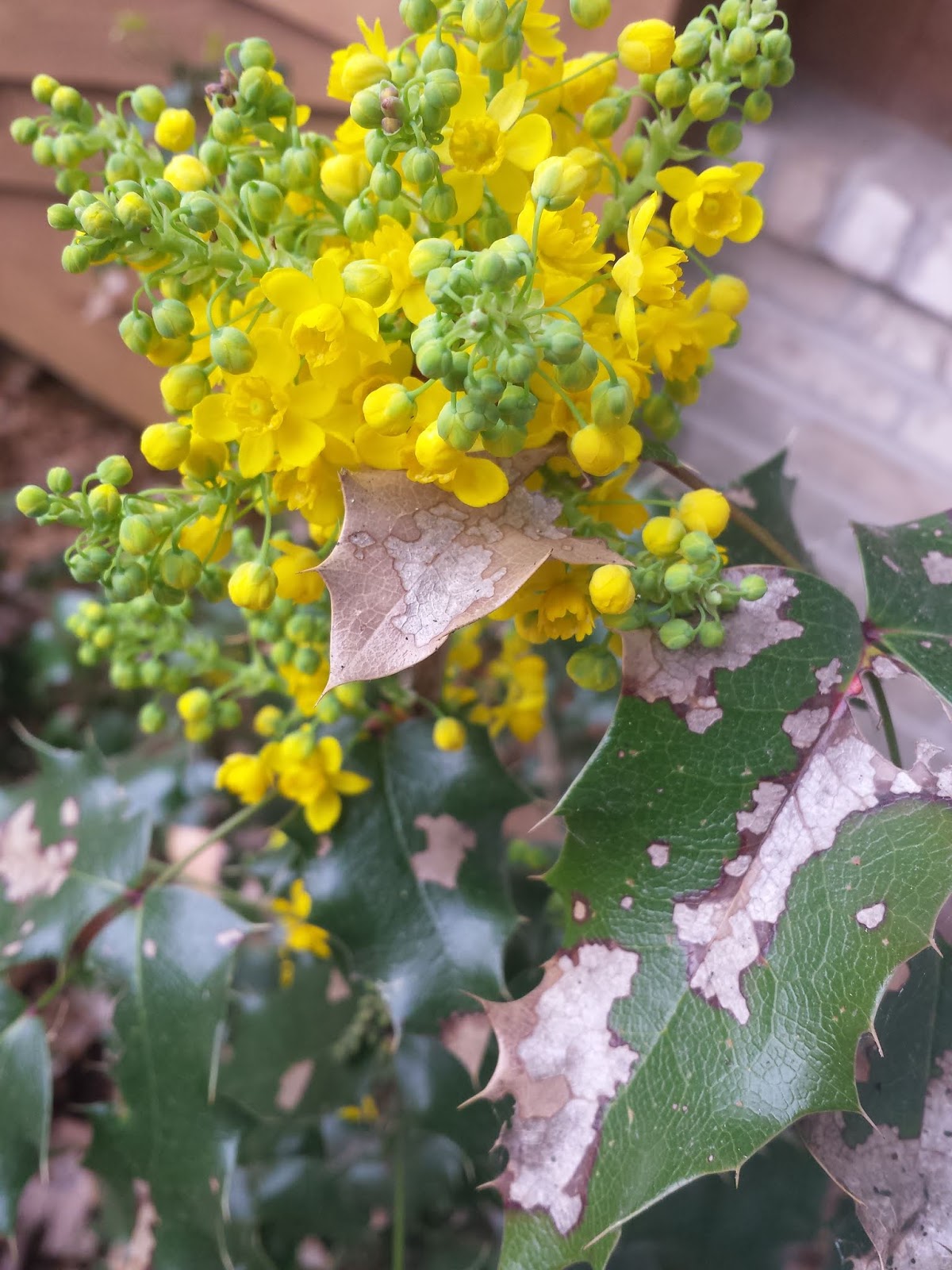
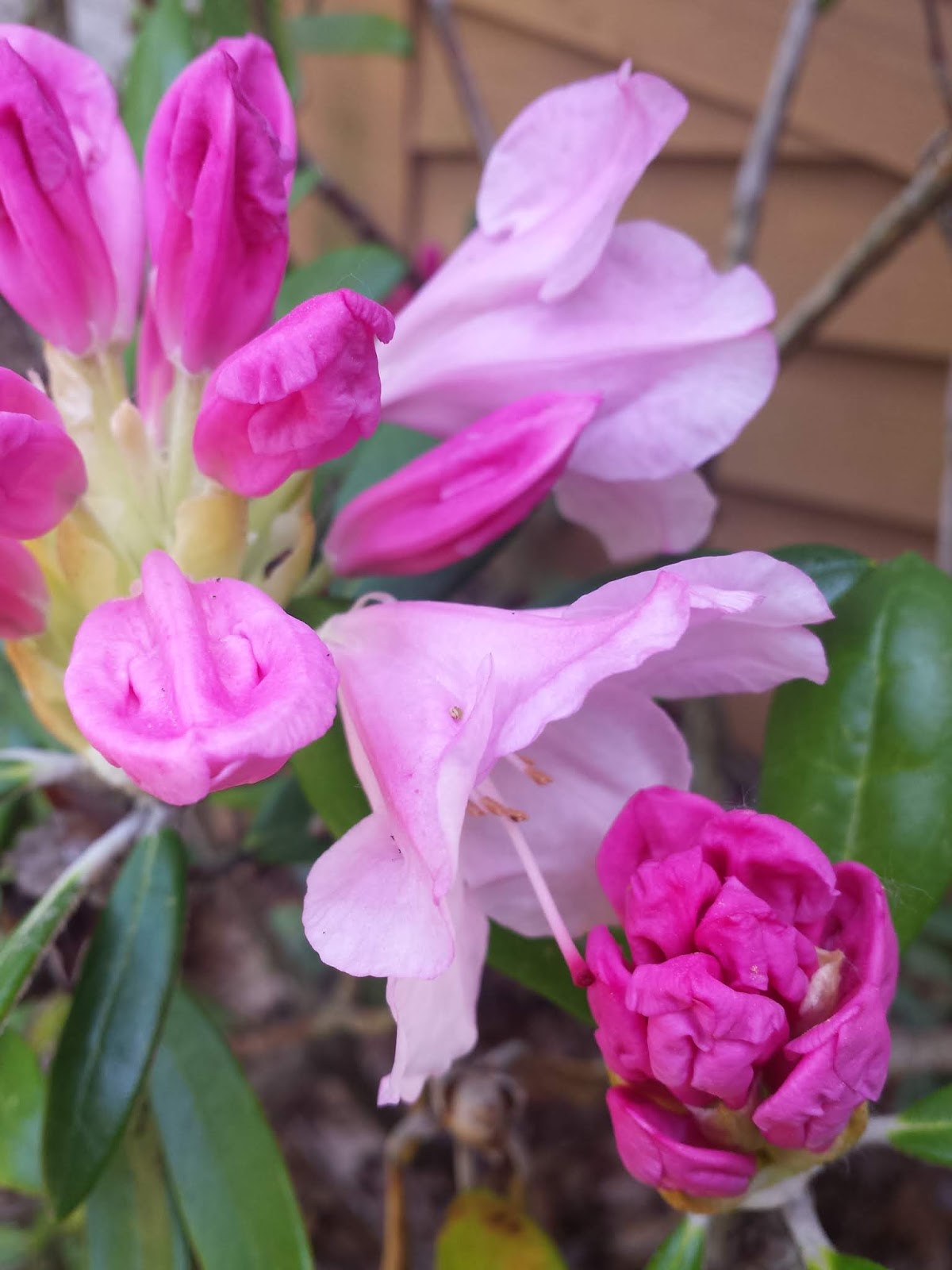
It's finally spring in my neck of the woods, and everything has suddenly burst into bloom.  Here's a little tour of the amazing things that sprook up around my house every year.


Wednesday, May 9, 2018

Vintage Craft Book Feature: BH&G Creative Crafts and Stitchery (USA 1976)

Another of my many needlework hobbies is the collection of vintage craft books.  Found in dusty corners of second hand shops, in pride of place in used book stores, these old tomes often contain beautiful nuggets of crafting wisdom, and a heaping helping of vintage charm.  Reviving the techniques, tips and retro projects is just one more way for us to bring back the wonders of the handmade.

Better Homes and Gardens: Creative Crafts and Stitchery - U.S.A. 1976


Much like the previous BH&G book I reviewed (Treasures From Throwaways), this one is packed with delightfully retro projects.  Though there is less of a focus on it, there are many projects in this book that feature natural or reused materials.  for example, it says to cut shapes out of  colored beverage cans for the cool shisha mirrors in the butterfly on the cover.  Painted rocks, driftwood sculptures and more alongside the more traditional knitting and macrame.


The butterfly is pretty cool, but I think these awesomely retro sweaters from the embroidery section deserve a special mention.

I see so many old knit and crochet doilies at thrift stores, and never know what to do with them, but hate to pass them up as they are so pretty.  Well, maybe this is the answer:  stick them on every available surface in a bathroom :P  In all seriousness, this does give me a few ideas: edges of towels, pillow covers, lace window curtains...


Even though I am hopelessly bad at crochet, this triangle shawl is one of my favorite projects in the whole book.

"The shawl...is a replica of one that a young Swedish bride made for her trousseau when she came to this country 100 years ago.  The adult version is worn by the great-granddaughter of the Swedish girl who crocheted the original wraparound shawl, and the child's version is worn by her great-great-granddaughter"

I love seeing replicas of historical needlework like this.  So many traditional garments only exist now in photos, and no one kept track of how to make them.  Having historical crafts preserved like this is always amazing to find in a modern book.

Maybe someday I'll finally get better at crochet and try to make one of these shawls.


These leaf art cards are another favorite of mine.  I have always been that weirdo who sees faces and scenes in completely mundane objects.  These leaf art cards are proof that someone else in the world has the same weird tendency.

I did make a few of these as Christmas and birthday cards one year.  While everyone said they were neat/pretty/what-have-you, a few definitely looked askance at me and asked what the shape was supposed to be.  I guess it takes a special kind of weird to appreciate them, but I am glad to be in that category.


All of the projects in this book are quite charming if you like the retro style.  They all have great instructions, so even if you just want to use the how-to info for your own crafts, it is a great resource.  It covers a pretty wide range of crafting disciplines, and has a lot of outside-the-box type inspiration to offer.  Case in point; this 'accent rug' that you literally draw on whatever floor you think needs an accent rug, but having a real rug would gum up the door.


Also, macralap is my new favorite crafting term.


Free Pattern Collection I

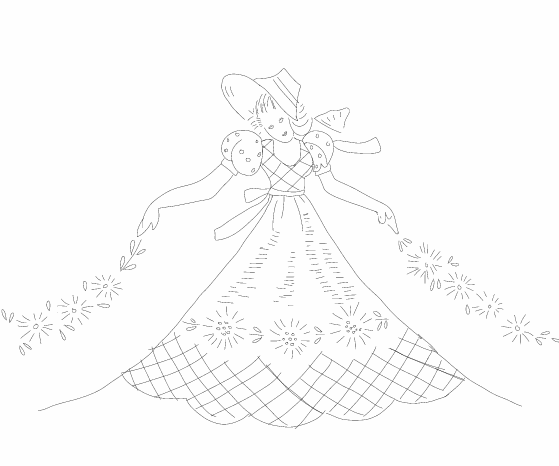
The last few week's worth of tracings all gathered together for your convenience, enjoy!


Monday, April 9, 2018

Vintage Craft Book Feature: Schoeller Wolle and Esslinger Wolle (Germany ~1980's)


Another of my many needlework hobbies is the collection of vintage craft books.  Found in dusty corners of second hand shops, in pride of place in used book stores, these old tomes often contain beautiful nuggets of crafting wisdom, and a heaping helping of vintage charm.  Reviving the techniques, tips and retro projects is just one more way for us to bring back the wonders of the handmade.


Schoeller Wolle and Esslinger Wolle Pamphlets - Germany ~1980's

Well, book is a bit of a misnomer here as this is actually a collection of pattern pamphlets from the yarn companies Schoeller Wolle and Esslinger Wolle.  


I found a total of eight of these pamphlets in a ziplock bag at a thrift store for the hefty sum of 10 cents.  While they are definitely 1980's style with all the awfulness that implies, there were a few (like the one above) that intrigued me enough to splurge on them.  The patterns are all completely in German, but I didn't let that deter me any more than the Dutch knitting book did.

Each pamphlet is a cute little fold out thing; with a picture of a pattern on the front and back (so two patterns per pamphlet) and all the instructions, including diagrams, in two or three pages inside.  The pamphlets aren't very big, 6" by 8" or so.  That small space means the patterns are a bit crushed in with a lot of abbreviations.  No where can I find a list of said terms, but I imagine the internet can help with that.  I may try to google assist translate the above jacket pattern, and if I do I'll share it here.

While the cacti are beyond goofy, the knit pants intrigue me.  I have a feeling that knit in a soft yarn they would be really great lay-around-the-house pants.  That little girl is rocking the single coolest accessory in the whole of the collection.  I am so jealous that my hair would never be able to do that.


I kind of want to translate this coat pattern just to figure out wth is going on with it.  It looks like it's knit sideways with giant short rows and changes of yarn?  Bizarre and terrible looking, but curiosity compels me.

All in all, this collection is mostly just a retro novelty, and I'm glad I didn't spend more than a dime on it.  I wish I could find more info on the yarn companies, but alas a semi-deep internet search has given me nothing.  I like searching up historical data about textile and craft companies, and it bugs me to come up with so much nothing.  

I have a feeling that none of the yarns called for exist any more, and finding substitutes without knowing anything about the originals will be difficult.  Between that and the seemingly extra-abbreviated patterns in a language I cannot read, recreating any of these may be quite the challenge.

On the other hand, I do like puzzles.